A lot of people don’t look into federal housing programs until they’re already in a tight spot financially. Knowing how these programs operate before you need them is one of the most underrated financial literacy moves a person can make.
The system run by the Department of Housing and Urban Development (HUD) covers a wider range of situations than most people assume.



Public housing, rental vouchers, disability-specific programs, senior housing support: it’s not one program, it’s a network of overlapping ones.
That gap between learning and accessing is what this article is really about. The Housing Choice Voucher program (commonly called Section 8) gets most of the attention, but it’s one piece of a much larger structure.
If you’re a renter living below your area’s median income, or you’re supporting a family on a fixed income, this is written specifically for you.
The HUD Programs People Actually Use
Public Housing Is Broader Than You Think
The image most people carry around for public housing is a tall concrete tower in a dense city. That mental picture is outdated and often wrong.
Public housing covers houses, scattered apartments, and small multi-unit buildings managed by local Public Housing Authorities (PHAs).
The program supports low-income individuals, seniors, and people with disabilities across both urban and rural areas.
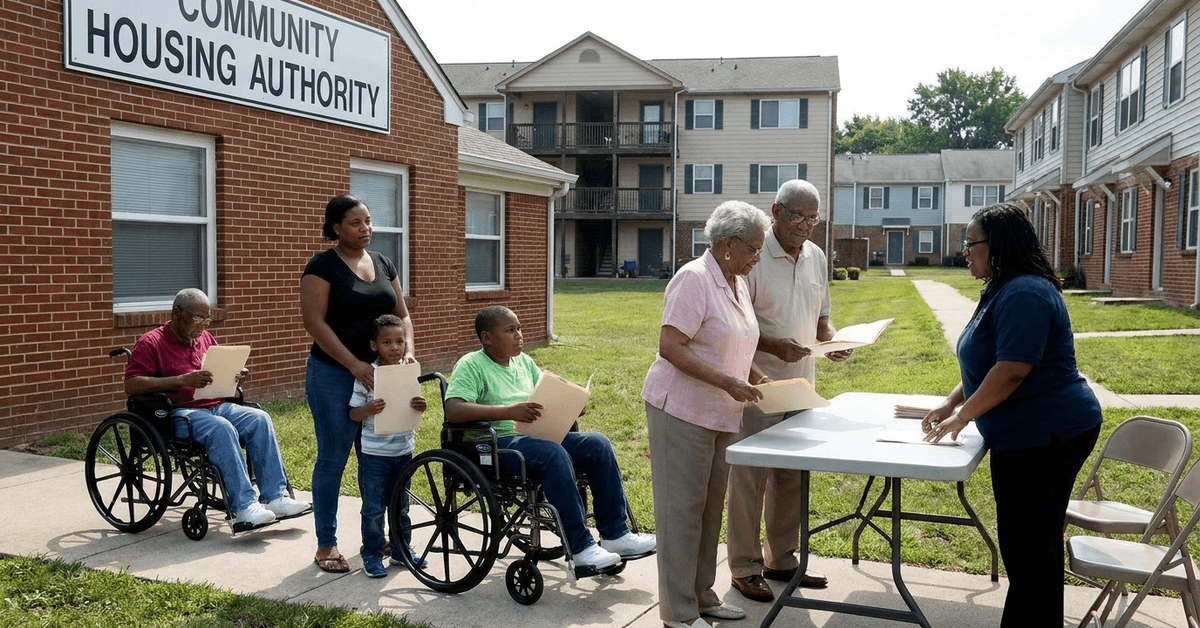
PHAs manage the properties directly under federal guidelines. Demand outpaces availability in almost every market, which means waiting lists are not an anomaly. They are the norm.
How Housing Choice Vouchers Actually Work
The Housing Choice Voucher program operates differently than public housing. Tenants receive government-backed rental support and then find their own apartment on the private market, provided the landlord agrees to participate.
The PHA covers a portion of the rent and the tenant pays the difference, capped at 30% of their adjusted gross income.
Portability is one of the program’s most useful and least discussed features.
Voucher holders can move within a metro area or even across state lines under “portability” rules, with some coordination required between the originating PHA and the receiving one.
What Happens After You Get a Voucher
Getting approved doesn’t mean moving in next week. The tenant has to locate a rental unit where the landlord agrees to accept the voucher.
The PHA then inspects the unit to confirm it meets health and safety standards. Only after that inspection passes does the subsidy payment begin.
In high-rent cities, this step trips a lot of people up. The PHA’s payment cap is based on local fair market rent guidelines, and if a landlord prices above that, the gap comes out of the tenant’s pocket.
Searching across different neighborhoods, including areas slightly outside the urban core, sometimes opens up more options.
Project-Based Rental Assistance: The One That Stays Behind
Project-Based Rental Assistance works the opposite way from vouchers. The subsidy attaches to a specific building, not the tenant. Qualifying residents live in HUD-approved properties where rent is subsidized at the unit level.
If a tenant leaves, the subsidy stays with the apartment and goes to the next qualifying resident.
This distinction matters when comparing options. Project-based units can be easier to access in some markets because the landlord has a guaranteed income stream, which makes participation more attractive to property owners.
Programs That Target Specific Groups
Section 202, Section 811, and the Programs Nobody Mentions First
When someone mentions HUD assistance, Section 8 usually gets all the airtime.
But Section 202 (housing for seniors) and Section 811 (housing for people with disabilities) are legitimate federal programs with their own eligibility tracks. They exist alongside vouchers, not as alternatives.
There are also less-discussed programs like the HOME Investment Partnerships and the Community Development Block Grant (CDBG), which funnel federal dollars to state and local governments to build and preserve affordable housing stock.
Renters don’t apply to these directly, but they’re the reason some affordable units exist in certain neighborhoods at all.
Income Limits Are Local, Not National
HUD uses Area Median Income (AMI) to set eligibility thresholds, and those thresholds vary sharply by region. A household income that qualifies as “very low-income” in rural Mississippi would not qualify in San Francisco.
HUD updates these numbers annually, so checking your local PHA’s current income limits is more reliable than relying on any number you find in an old article.
Most programs prioritize “extremely low-income” and “very low-income” households, which are calculated at 30% and 50% of AMI respectively. Knowing where your income lands relative to local AMI tells you a lot about which programs to pursue first.
Applying for HUD Assistance: The Realistic Version
I think the biggest mistake applicants make is treating the application like a single event rather than an ongoing process. The PHA doesn’t send regular updates.
Waiting lists close and reopen without much fanfare. A single missed notification can set someone back months.
Documentation You’ll Need Before You Start
Getting your paperwork together before contacting a PHA saves time. PHAs generally ask for:
- Proof of income (pay stubs, tax returns, benefit letters)
- Government-issued ID for all household members
- Proof of citizenship or eligible immigration status
- Documentation of disability or age for specialized programs like Section 202 or 811
- Details about family composition
Some PHAs only accept applications during open enrollment windows or lottery periods, not year-round. Checking your local PHA’s website or calling directly to ask about their current schedule is the first real step.
Briefings and Interviews: Don’t Skip the Questions
Almost every application process includes an orientation or briefing session. These sessions explain the program rules, portability options, renewal requirements, and tenant responsibilities.
I would go into this with a written list of questions about moving timelines, lease terms, and what happens if income changes.
The briefing is one of the few moments where you have direct access to someone who can clarify the rules before anything goes wrong.
The Comparison That Helps Clarify Your Options
| Feature | Public Housing | Housing Choice Voucher | Project-Based Assistance |
|---|---|---|---|
| Who holds the subsidy | The unit | The tenant | The unit |
| Tenant mobility | Low | High | Low |
| Landlord required | No (PHA-managed) | Yes (private market) | No (HUD-approved building) |
| Unit location | Fixed | Tenant’s choice | Fixed |
| Typical wait | Long | Long | Varies by building |
The portability difference between vouchers and project-based assistance is the one factor that often gets overlooked when people compare options. If staying in a specific neighborhood matters to you, project-based units might be worth targeting early.
One Position I Disagree With in Housing Advice
I genuinely disagree with the advice that says “apply everywhere and just wait.” The framing assumes passivity is the right strategy. My take: applicants who treat the waitlist as the end of the process lose years they didn’t have to lose.
A better approach is to apply to your local PHA’s waitlist and simultaneously research whether your city or state runs complementary emergency rental assistance funds or local affordable housing programs.
Organizations like the National Low Income Housing Coalition track these resources by state, and they update their data regularly.
Some city governments operate their own rental voucher programs with shorter queues than federal ones. Sitting on a single federal waitlist while ignoring those parallel options is a real cost.
The HUD official resource locator is a useful starting point for finding your local PHA and understanding what programs operate in your area.
Questions People Ask About HUD Housing Assistance
Q: Can I apply to multiple PHAs at the same time? Yes. There’s no rule against applying to more than one PHA’s waitlist simultaneously. Applicants in high-cost metro areas sometimes apply to PHAs in nearby counties or cities where waiting lists are shorter, then use portability rules to move the voucher once approved.
Q: Does getting a housing voucher affect my other benefits? It can. Rental assistance is a non-cash benefit, but changes in your housing costs might affect income calculations for other programs. Checking with a benefits counselor or local legal aid office before applying is a smart move, especially if you receive SSI or SNAP.
Q: What are my rights as a HUD tenant if my landlord isn’t maintaining the unit? HUD tenants have the same basic renter protections as anyone else, plus the unit must meet HUD’s minimum health and safety standards to remain eligible for subsidy. If a landlord fails to maintain those standards, the PHA can withhold payment and the tenant can request a new inspection. Local legal aid organizations offer free guidance on disputes.
Q: What happens to my voucher if I move to a different state? Vouchers can move with you under the portability process, but it requires coordination between your current PHA and the receiving PHA in the new state. Timing varies. Notify your PHA as early as possible before a planned move and ask specifically about inter-state portability timelines in your situation.
Q: Are rural areas covered by HUD programs? Yes. Both public housing and the voucher program operate in rural counties, not just cities. Rural PHAs often have different inventory levels and income thresholds than urban ones, so eligibility in a rural area might look different from what you’ve read about urban markets.
Conclusion
The federal housing assistance system offers real, tangible support to millions of households who use it every year.
Getting into it requires understanding the local structure, not just the national overview. Every PHA operates its own waitlist with its own timeline and its own rules about when applications open.
The reader who treats this as a research project rather than a one-time form submission is the one who actually gets housed.