A free government phone with SNAP comes down to one number: $9.25 a month. That is the federal credit your household receives, and the “free phone” is something a carrier wraps around it.
Lifeline pays carriers to discount your monthly service. Any device they mail you is the carrier’s own offer, and you can often keep the phone you already own and take only the discount.
This guide is for SNAP households already squeezing a prepaid phone bill into a tight month, who want the benefit working fast without following stacking advice for a program that no longer exists.
Can You Get a Free Government Phone With SNAP in 2026?
Yes. If anyone in your household receives SNAP, your household meets the eligibility test for Lifeline, the FCC program behind every “free government phone” ad you have scrolled past.
Lifeline is a federal FCC program that takes up to $9.25 a month off phone or internet service for eligible households, including any household enrolled in SNAP. Households on qualifying Tribal lands can receive up to $34.25 a month.
Where the “Free” Part Comes From
Carriers such as Assurance Wireless and SafeLink Wireless collect that $9.25 per subscriber and build a plan around it with minutes and some data. Many add a basic Android phone to win your signup.
Plans differ by carrier and by state. Two people approved on the same afternoon can end up with very different data allowances, which is why the carrier you pick deserves more thought than the application itself.
Can You Still Combine Lifeline With the Affordable Connectivity Program?
No. The Affordable Connectivity Program (ACP) stopped new enrollments in February 2024 and shut down in June 2024 after Congress let its funding run out, so there is nothing left to combine with Lifeline.
Any page still promising extra free data through Lifeline plus ACP is running on 2023 information. A household planning its budget around that second credit is counting money that disappeared over two years ago.
What Lifeline Alone Gets You Now
Your data now comes only from the Lifeline plan. If the allowance runs thin by mid-month, free Wi-Fi at public libraries and community centers can handle heavy tasks like job portals and telehealth video calls.
How Do You Apply for a Free Government Phone With SNAP?
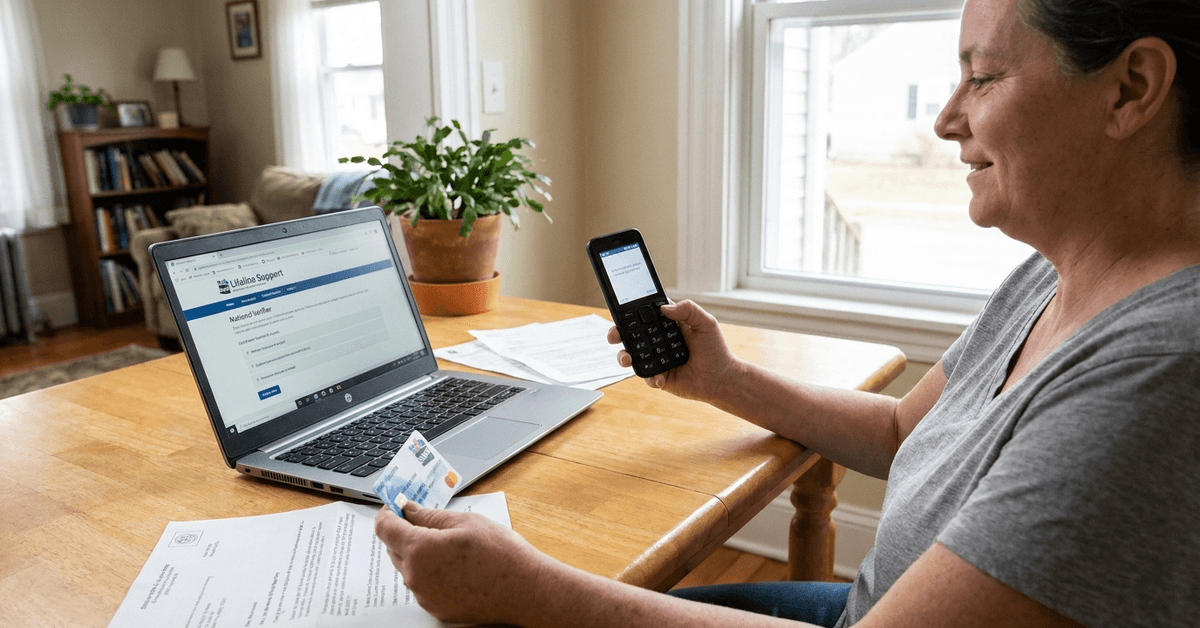
You apply through the National Verifier, then finish enrollment with a Lifeline carrier that serves your ZIP code. The National Verifier is the eligibility system run by the Universal Service Administrative Company (USAC) that approves or denies every Lifeline application.
You can start at the official Lifeline Support site or through a carrier, which submits to the same system. Approval can come through in minutes when your details match government records.
Gather Your SNAP Proof First
Mismatched information causes most delays, so pull these together before you open the form:
- A recent SNAP benefits letter or official notice of eligibility
- A government ID showing your legal name exactly as it appears on your SNAP case
- The last four digits of your Social Security number, or a Tribal ID number
- A physical home address, since a P.O. box alone will not pass
Steps From Approval to a Working Phone
The sequence is short once your documents are ready:
- Submit your application through the National Verifier and upload SNAP proof if asked
- Choose an approved carrier in your area and complete its enrollment form
- Pick a shipped device or a SIM card for your current phone
- Follow the activation instructions that arrive in the package
Got a denial? The usual culprits are a nickname in place of your legal name or an outdated address. Fix the record and reapply.
Should You Take the Free Phone or Keep Your Own?
If your current phone works and is unlocked, keep it and ask for a SIM-only enrollment. A SIM-only Lifeline enrollment applies the discount to your existing compatible phone, and the carrier mails a SIM card in place of a new device.
“Take whatever free device they ship” gets repeated on nearly every free phone page. I disagree for anyone holding a working phone, because that device is a basic Android model funded from a $9.25 monthly credit.
A phone you already own probably has more storage and a better camera for scanning documents. Those two things count when you are uploading pay stubs or joining a video interview from a parking lot.
Free Device vs. Bring Your Own Phone
The free device makes sense when you have no phone at all, and the SIM route wins almost everywhere else.
| Factor | Free shipped phone | Bring your own phone |
|---|---|---|
| Device quality | Basic Android model | Whatever you already own |
| Wait time | Device shipping plus setup | SIM card only, usually faster |
| Data transfer | Contacts and apps start fresh | Nothing to move |
| Best for | No phone, or a broken one | A working, unlocked phone |
What Can Make You Lose Your Free Government Phone?
Missing recertification, losing SNAP, or a second Lifeline account in your household are the fastest ways to lose the benefit. Lifeline requires every household to recertify once a year, and USAC sends a notice before your benefit anniversary.
How Lifeline Counts a Household
Lifeline defines a household as people who share income and expenses. Roommates at one address who split only rent may each qualify by filling out USAC’s household worksheet.
Two Lifeline accounts inside one household, such as a parent and an adult child on separate carriers, can get both cancelled. Pick one line and stick to it.
Your SNAP Case and Your Phone Discount Are Linked
Recertification checks whether you still receive SNAP. SNAP work requirements expanded under the One Big Beautiful Bill Act of 2025, so a closed SNAP case can quietly end your phone discount at the next recertification.
I think this link catches more households in 2026 than any application error, because a SNAP case can close months before the annual Lifeline recertification notice arrives.
Keep your SNAP renewal dates and your Lifeline anniversary on the same calendar.
Habits That Keep the Discount Active
Small habits prevent most cancellations:
- Use your service at least once every 30 days, since unused free lines get flagged for removal
- Answer recertification notices the week they arrive
- Report a move to your carrier within 30 days
- Never sell, lend, or transfer the phone or SIM to someone outside your household
2026 Rule Changes Worth Watching
FCC Chair Brendan Carr has proposed Lifeline reforms aimed at duplicate enrollments. A May 28, 2026 Justice Department legal opinion classed Lifeline as a federal public benefit, which may tighten eligibility for some non-citizens.
Neither change has rewritten the SNAP pathway as of late October 2026. Check the FCC’s Lifeline consumer page before you apply or recertify for the latest rules.
Questions People Ask About Free Government Phones With SNAP
These come up again and again from SNAP households weighing whether Lifeline is worth the paperwork.
- Q: Does getting a Lifeline phone lower my SNAP benefits?
No. Lifeline and SNAP are separate programs, and your food benefit amount does not change because you receive a phone discount. SNAP is simply the proof that gets you in. - Q: Can I get a free tablet instead of a phone with SNAP?
Lifeline covers service, so any tablet offer comes from the carrier as a promotion. Many of those tablets carry a small copay, so read the fine print before you agree to one. - Q: Can I switch Lifeline carriers if my coverage is bad?
Yes, you can transfer your benefit to another participating carrier. Ask your current carrier first whether it expects the shipped device back. - Q: Is it safe to share my information on a free phone application?
The National Verifier encrypts submitted documents and uses them only for eligibility checks. Be wary of anyone asking for payment to enroll, since Lifeline enrollment itself costs nothing. - Q: What happens if I miss my recertification deadline?
Your carrier will de-enroll you, and the discount stops. You can reapply, though you may face a gap in service while the new application clears.
Conclusion
SNAP enrollment already qualifies your household for Lifeline, so the real decision is which carrier and device fit you. A SIM-only enrollment often beats the free phone when your current device already works well.
Keep your SNAP renewal and Lifeline recertification dates together so one lapse never cancels the other benefit. Check the official Lifeline rules this month, because 2026 proposals could still reshape who qualifies next year.