You can search for an Aldi credit card application all afternoon and find nothing to apply for. ALDI US doesn’t offer a store-branded card. It started accepting regular credit cards in March 2016, and that’s still the whole arrangement.
The decision moves one step over: which ordinary card earns the most on an Aldi receipt. The cheaper your cart, the less a fee-charging rewards card pays you back, so Aldi’s low prices also change which card comes out ahead.



This guide is for households that do most of their grocery runs at Aldi and keep the monthly bill modest. If your receipt rarely tops a few hundred dollars, the usual “best grocery card” answer may be the wrong one for you.
Does Aldi Have Its Own Credit Card in 2026?
No. ALDI US does not issue a store-branded credit card or a rewards card tied to its stores as of October 2026.
ALDI accepts Visa, Mastercard, Discover, and American Express at its US stores, a policy that began in March 2016 after years of cash and debit only.

That means any “Aldi card perks” you’ve read about are really the perks of whatever bank card you bring to the register. The rewards, fees, and interest all come from your card issuer.
What Works at the Aldi Register
Contactless wallets like Apple Pay and Google Pay work at staffed lanes and self-checkout. EBT/SNAP cards are accepted. Personal checks are not.
Gerald’s 2026 payment guide mentions reports of some California locations declining AmEx even though ALDI’s policy includes it. Keeping a backup Visa or Mastercard in your wallet costs nothing.
Spotted an “Aldi Credit Card” Application Online?
Be careful with any page that asks for your Social Security number to “apply for the Aldi card.” Check ALDI’s payment FAQ on its own site first. A real ALDI product would appear there.
Why Aldi Prices Change Which Grocery Card Wins
A lower monthly grocery bill means an annual-fee card has less room to earn its fee back. Aldi shoppers usually run lower bills, since low prices are the reason they shop there.
The Blue Cash Preferred Card from American Express pays 6% cash back at US supermarkets on up to $6,000 a year, then 1%. It has a $0 intro annual fee for the first year and $95 after that.
The $264 Break-Even Line
Motley Fool Money’s 2026 grocery card award says anyone spending $6,000 a year or less almost definitely can’t do better than Blue Cash Preferred. I disagree for Aldi shoppers who spend under $264 a month. Below that line, a no-fee 3% card nets more.
The math is simple. A 6% card minus a $95 fee and a 3% card with no fee tie at about $3,167 a year in supermarket spending, which works out to roughly $264 a month.
At $200 a month, Blue Cash Preferred earns $144 and keeps $49 after the fee. A 3% no-fee card keeps $72. A cheaper cart flips the ranking.
What About the Free First Year?
During year one, with no annual fee, 6% beats 3% at every spend level. The trap is leaving the card on autopilot into year two while your Aldi bill holds at $150 or $200 a month.
Set a calendar reminder for month eleven. That’s when you decide whether the $95 fee still makes sense for your actual receipts.
Blue Cash Preferred vs Capital One Savor for Aldi Shopping
After year one, Capital One Savor usually wins for Aldi-only households spending under about $264 a month, and Blue Cash Preferred wins above that. The Capital One Savor card earns unlimited 3% cash back at grocery stores, excluding superstores like Walmart and Target, and charges no annual fee.
Savor has no spending cap. Blue Cash Preferred drops to 1% after $6,000 a year, but most Aldi-heavy households never reach that limit.
How Much Each Card Pays at Your Aldi Spend
These figures show net cash back from year two onward, with Blue Cash Preferred’s $95 fee already subtracted:
| Monthly Aldi spend | Yearly spend | Blue Cash Preferred (6%, $95 fee) | Capital One Savor (3%, $0 fee) |
|---|---|---|---|
| $150 | $1,800 | $13 | $54 |
| $250 | $3,000 | $85 | $90 |
| $400 | $4,800 | $193 | $144 |
| $500 | $6,000 | $265 | $180 |
Under roughly $264 a month, the no-fee card keeps more money in your pocket. Above it, the 6% card pulls ahead.
Check How Aldi Codes on Your Statement
Card issuers reward the merchant category code, not the store name. Aldi typically codes as a grocery store, but Money Crashers’ Savor review notes that discount stores can sometimes earn only 1% on Savor.
After your first Aldi trip, open the transaction in your card app and confirm it shows as groceries. If it doesn’t, the math in the table above won’t hold for you.
What Can Shrink Your Aldi Rewards?
The two biggest threats are interest charges and bonus requirements you can’t reach on an Aldi budget. Blue Cash Preferred carries a variable APR of 20.24% to 29.24%, according to Motley Fool Money’s card listing.
At a 24% APR, one month of interest on a $300 balance comes to about $6. That’s the same as a full month of 3% cash back on $200 of groceries, gone.
Welcome Bonus Thresholds vs an Aldi-Sized Budget
Blue Cash Preferred’s $250 welcome bonus requires $3,000 in purchases within six months. That’s $500 a month, which an Aldi shopper spending $250 won’t reach on groceries alone.
Savor’s $200 bonus after $500 in three months is much easier to earn on a small Aldi budget. I think bonus reachability matters more for this reader than the headline rate, because a missed $250 bonus outweighs a full year of the 6% card’s extra earnings at $200 a month.
A Checklist of Terms to Read First
The CFPB’s credit card agreement database posts issuers’ full terms. Check these items before you apply:
- Annual fee after the intro year, and the month it first posts
- Grocery category rules and any yearly cap, such as $6,000 on Blue Cash Preferred
- Welcome bonus amount and deadline, compared with your real monthly spend
- Variable APR range, in case a balance ever carries over
- Redemption rules, including minimums or expiry on earned cash back
Small Ways to Get More From an Aldi Receipt
The easiest extra savings come from card-linked offers and paying in full, not from switching cards every year. In spring 2026, American Express ran an Amex Offer paying 15% back on one Aldi purchase, capped at $6, through May 24, 2026.
Six dollars won’t change your life, but it’s free money for a tap you were going to make anyway. A few habits add up more reliably:
- Scroll your card app’s offers tab before each big shop, since retailer deals come and go
- Pay the statement balance in full, never just the minimum
- Keep a backup Visa or Mastercard for stores where AmEx gets declined
- Shop with a list near the Aldi Finds aisle, where nobody has ever needed a kayak and a waffle maker on the same Tuesday
Questions People Ask About the Aldi Credit Card
These are the follow-up questions that come up once people learn there’s no branded card to apply for.
- Q: Can I use a credit card at Aldi self-checkout?
Yes. Self-checkout lanes take credit cards, debit cards, and tap-to-pay wallets, but not cash. If you plan to pay cash, use a staffed lane. - Q: Does Aldi count as a grocery store for credit card rewards?
Usually, yes. Aldi typically codes under the grocery category, so most grocery bonus cards apply. Still, check your first statement, because issuers set their own category rules. - Q: Does Aldi UK have a credit card?
No branded one. Finder’s UK guide says Aldi UK has accepted major credit cards since 2014, so you pay with a regular bank card just like in the US. - Q: Can I pay with EBT at Aldi?
Yes. ALDI accepts SNAP benefits through EBT cards for eligible food items. Split payment with a credit card works when your cart includes non-eligible items.
Apply for a Credit Card That Rewards Aldi Purchases
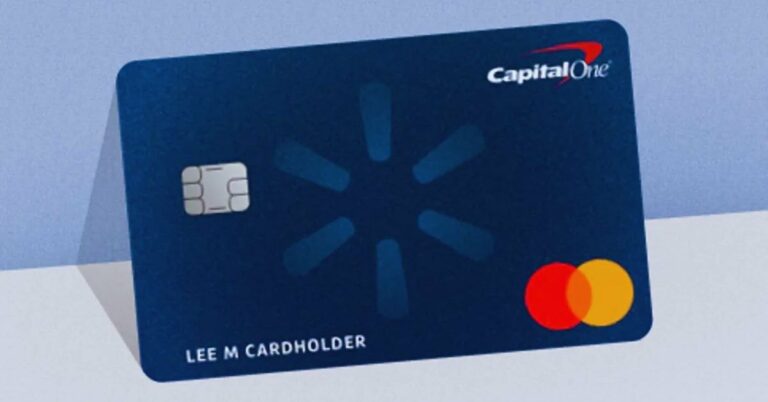
Looking to earn cash back on your Aldi grocery shopping? The Capital One Savor Cash Rewards Credit Card offers unlimited 3% cash back on eligible grocery purchases with no annual fee.
Eligible US residents can review the card’s benefits, check eligibility, and start an application through Capital One’s official website.
Apply for Capital One Savor – Official Website
Approval is subject to creditworthiness. Review APRs, rewards eligibility, and card terms before applying. This is not an Aldi-branded credit card.
Conclusion
ALDI US has no branded credit card, so your rewards depend entirely on which ordinary card you choose. Aldi’s low prices push many households under $264 monthly, where a no-fee 3% card beats 6%.
Check your Aldi transaction’s category code and your bonus deadline before trusting any card ranking you read online. Pull up last month’s Aldi receipts tonight, do the quick math, and see which card wins for you.