Renting in the US is expensive enough before you factor in the confusing web of programs designed to help you afford it. If you qualify for housing assistance and have no idea where to start, you are not alone.
The programs exist. The agencies are real. The problem is that the path from “I need help” to “I have a voucher” is full of dead-end websites, outdated contact numbers, and forms that go nowhere.


I think the single most overlooked part of this process is the difference between finding a program and finding the right local agency that actually manages it. A federal program name means nothing without a working PHA contact behind it.
Why Public Housing Agencies Are Your Real Starting Point
The US Department of Housing and Urban Development sets the rules. Public Housing Agencies, known as PHAs, do the actual work.
They manage waitlists, process applications, and hand out vouchers. HUD does not give you a voucher. Your local PHA does.
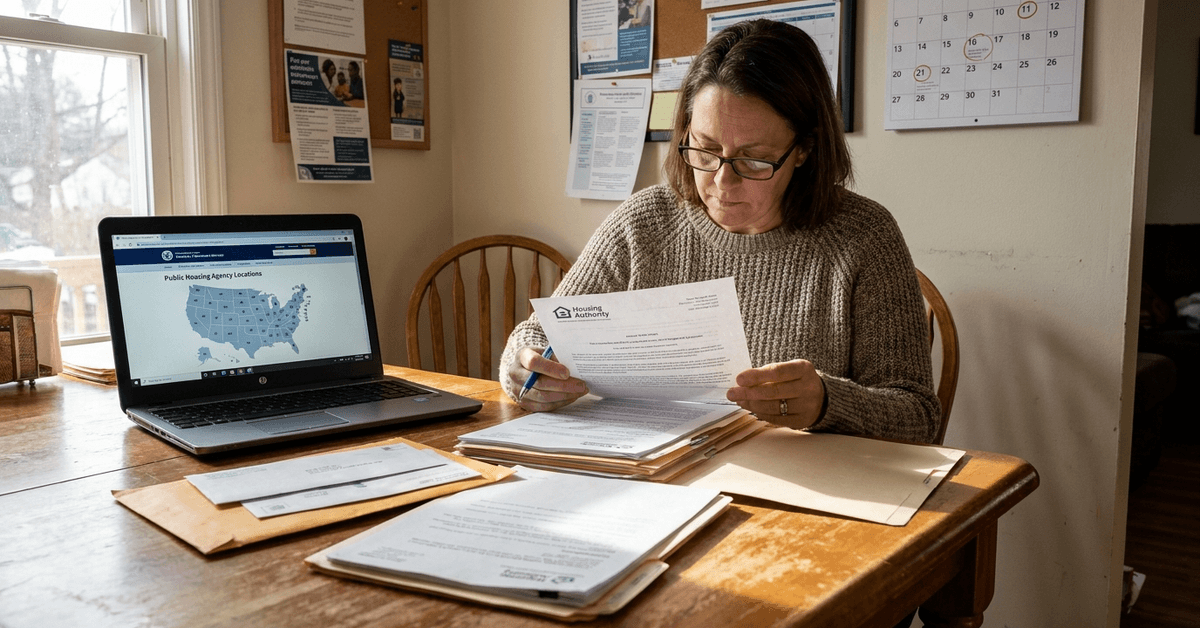
This distinction trips people up constantly. Someone reads about Section 8, goes to HUD’s website, can’t figure out how to apply, and assumes the program is closed or inaccessible. The program is neither.
The correct move is to find the PHA that covers your ZIP code, then contact them directly.
PHAs range widely in size. A PHA in a major city like Los Angeles or Chicago manages thousands of units and runs multiple programs simultaneously. A rural PHA might cover a single county with a staff of ten people.
Both use the same federal framework, but their waitlist status, application windows, and local rules are completely different.
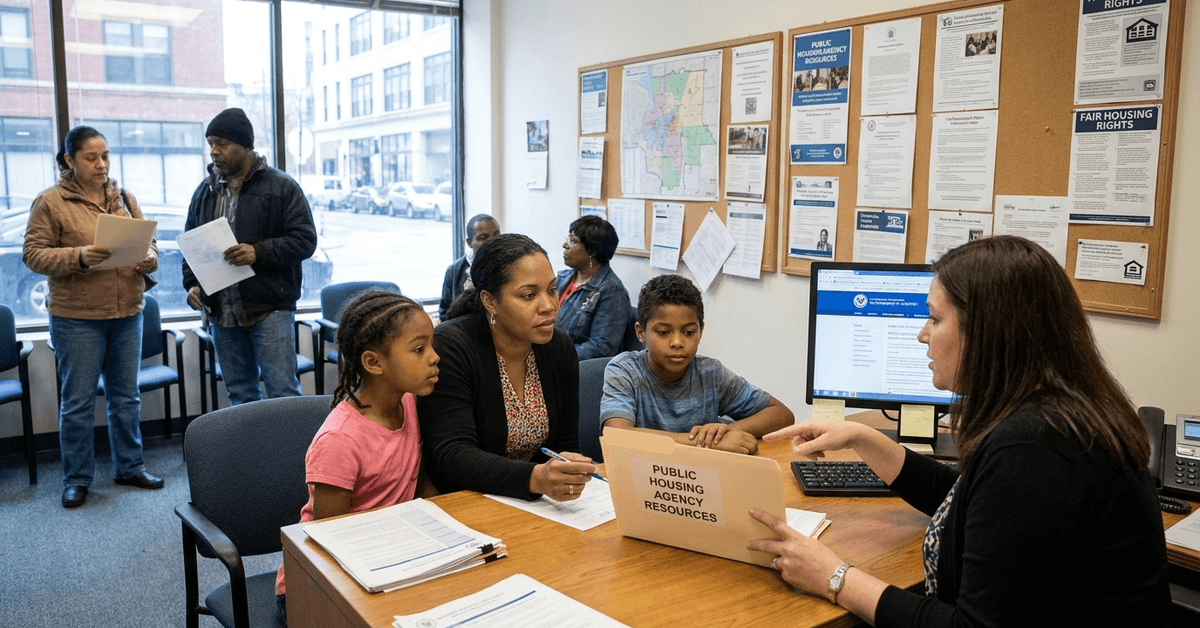
How to Actually Find Your PHA
HUD runs a searchable tool that lets you look up every recognized PHA in the country by state, city, or ZIP code.
It returns the agency name, address, phone number, and website when available. That tool is the HUD PHA Contact Tool, and it should be your first stop, not Google.
I was skeptical about how current the listings were, but the HUD directory gets updated when agencies report changes, which keeps it more accurate than third-party housing sites that copy old data and never revise it.
State housing authority websites are a second useful layer. Many states run their own directories that update faster than the federal listings on local changes. If your state has a dedicated housing finance agency, check their site alongside HUD’s tool.
Things That Slow Down Your Application Before It Starts
A lot of people arrive at the PHA application window unprepared. PHAs open and close their waitlists at different times, sometimes for only a few days.
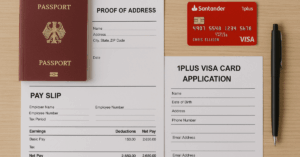
If you are not ready to apply the moment a waitlist opens, you miss it. Documents you will need in advance include:
- Government-issued ID for every adult household member
- Proof of income or benefits such as pay stubs, SSI letters, or employer verification
- Tax returns from recent years
- Social Security numbers for all household members
- Current lease or residency documentation
Getting these together before any waitlist opens is not optional. PHAs reject incomplete applications. They do not usually follow up to ask for missing documents.
The Programs PHAs Actually Manage
Not every PHA runs every program. But these are the ones you are most likely to encounter:
- Section 8 Housing Choice Vouchers are the program most people have heard of. Eligible households receive a voucher that covers part of their rent when renting from a private landlord. The voucher amount is tied to local fair market rents set by HUD. Demand is consistently high, and waitlists in urban areas can run several years long.
- Public housing units are apartments or townhouses owned and managed by the PHA itself. Rent is typically set as a percentage of household income, which keeps it low for qualifying families. These units are in designated buildings or communities, not scattered throughout the private market.
- Specialized housing programs cover veterans through the Veterans Affairs Supportive Housing (VASH) program, elderly residents through HUD’s Supportive Housing for the Elderly program, and people with disabilities. Availability is more limited than general programs, but PHAs have specific contact lines for each.
Comparing the Main Program Types
| Program | Who Rents From | Rent Structure | Waitlist Demand |
|---|---|---|---|
| Section 8 Voucher | Private landlord | PHA pays partial rent | Very high |
| Public Housing | PHA directly | Percentage of income | High |
| VASH (Veterans) | Private or PHA | Subsidized | Moderate |
| Elderly/Disability Housing | PHA or nonprofit | Subsidized | Varies by area |
Your location shapes which of these is realistically accessible. A program with a short waitlist in a rural county might have a three-year waitlist in the same state’s largest city.
The Scam Problem Is Worse Than People Admit
I think the housing assistance space is one of the worst areas online for misinformation, and that is not an accident.
Fraudulent sites mimic official government pages and charge fees for free applications. Some collect personal information and do nothing with it. Others redirect applicants to phishing forms.
The HUD Fair Housing Office has documented complaints involving fake application portals. Real PHAs do not charge application fees. Real waitlists are free to join.
A few red flags worth knowing:
- Any site charging a fee to access a Section 8 application
- Websites with no physical address or phone number for the agency
- “Guaranteed approval” language anywhere on the page
- Contact information that does not match the HUD directory listing
If something looks off, run the agency name through HUD’s PHA tool to verify it exists at the address listed.
Your Legal Protections as an Applicant
The Fair Housing Act prohibits discrimination based on race, color, religion, sex, disability, family status, or national origin. This applies at the PHA level and at the private landlord level when a Section 8 voucher is involved.
If you believe a PHA or landlord has discriminated against you, HUD’s Fair Housing complaint process is free to use. Local fair housing organizations also take complaints and sometimes provide legal representation.
PHAs are also required to make their waitlist policies publicly available. If an agency is vague about how the list works, ask directly. A PHA that refuses to explain its own process is a red flag worth documenting.
One Counterintuitive Move Most Applicants Skip
I genuinely disagree with the common advice to “apply to every program you qualify for as fast as possible.”
The reasoning sounds practical but it creates real problems. PHAs track your applications, and submitting duplicate or inconsistent information across multiple agencies can flag your file and delay processing.
At one PHA I reviewed in a housing advocacy report, inconsistent income documentation across multiple simultaneous applications was cited as a top reason for administrative holds on files.
A focused strategy works better. Pick the two or three PHAs most relevant to where you want to live, get your documents in order, and apply cleanly when waitlists open. One complete, accurate application moves faster than five rushed ones.
When PHAs Connect You to Other Help
PHAs are sometimes a gateway to support beyond housing. Many maintain referral relationships with food pantries, legal aid organizations, and employment services.
If your situation involves more than just housing costs, asking your PHA caseworker about community partner referrals is worth a conversation.
Some PHAs also connect applicants to rental assistance charities that can help bridge the gap while a waitlist application is pending.
Questions People Ask About US Housing Assistance
Q: Can I apply to multiple PHAs at the same time? Technically yes, but submit only one application per agency and make sure your documentation is consistent across all of them. Inconsistencies in income or household size between applications can trigger administrative holds that slow everything down.
Q: How do I know if a housing assistance website is legitimate? Cross-reference any agency name and contact information against HUD’s official PHA locator tool. Real PHAs have verifiable addresses and phone numbers listed there. Any site that charges a fee for a Section 8 application is fraudulent.
Q: What happens if my household situation changes while I’m on a waitlist? Notify the PHA immediately. Changes in income, household size, or address need to be reported in writing. Failing to update your file can result in removal from the waitlist.
Q: Do PHAs ever open waitlists without advance notice? Some do. Signing up for email alerts through your state housing authority and checking individual PHA websites regularly is the most reliable way to catch short application windows.
Q: Are Section 8 waitlists the same everywhere? No. Each PHA runs its own waitlist independently. A closed waitlist in one city does not mean the same program is unavailable in a neighboring county. Checking multiple PHAs in your target area is worth the time.
Conclusion
Affordable housing assistance programs in the US are real, funded, and actively placing families every year. The process requires patience, correct documentation, and knowing which agency actually handles your area.
Staying connected to your PHA and checking official directories regularly keeps you ahead of waitlist openings. Protecting yourself from scam sites is just as important as finding the right program in the first place.