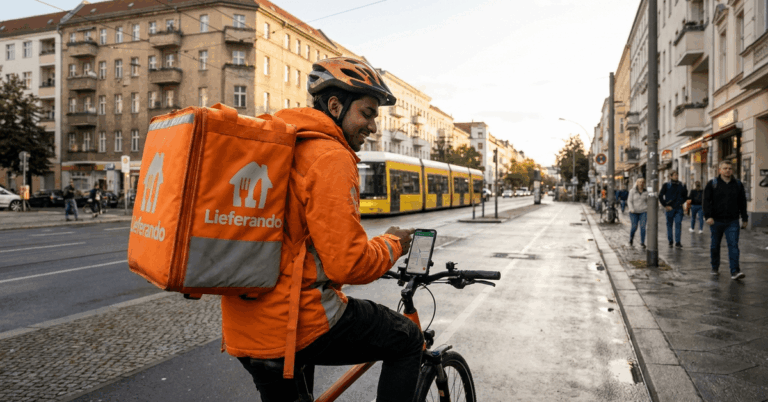
Food delivery jobs have become a lifeline for thousands across Europe, particularly for those seeking flexible, independent work. If you’re delivering in cities like Berlin, Paris, or Brussels, you might wonder:
How are taxes handled for couriers? The rules can feel a bit daunting—especially if you’re just starting out. Yet, understanding the basics can make a difference, both for your peace of mind and your earnings.



Why Food Delivery Couriers Need to Think About Taxes?
Delivery work looks simple on the surface, but as an independent courier, you’re usually treated as self-employed or a small business.

That means tax obligations are your responsibility, not the platform’s. Some might be surprised—after all, isn’t gig work meant to be straightforward?
However, facing the reality early can save trouble later. Missing tax deadlines or underreporting income might lead to fines or back payments.
Taking a bit of time to understand tax issues can help you avoid problems and even increase your take-home pay.
Key Terms Every Courier Should Know
Certain phrases come up again and again. For example:
- Self-employment: When delivering for platforms like Uber Eats or Deliveroo, you’re often not an employee. Instead, you act as an independent contractor responsible for your own taxes.
- VAT (Value Added Tax): In some countries, you might need to register for this if your earnings exceed a certain threshold. Not everyone will, but it’s wise to check.
- Tax Identification Number (TIN): Needed to report income and file taxes correctly. Most countries have a unique system.
- Social Contributions: Some places require payments towards pension or health insurance, especially if you earn above a set level.
Basic Tax Responsibilities for Food Delivery Couriers
Rules differ depending on where you live and deliver. But most couriers share a few standard duties:
- Registering as self-employed with the local tax authority
- Tracking all business income (every cent earned from platforms)
- Keeping receipts for expenses (fuel, bike maintenance, gear)
- Filing an annual tax return
For some, the process can be started online. Others might need an in-person appointment, especially for initial registration. There’s usually a short learning curve at first, but after a year or two, it can feel almost routine.
Common Expenses Couriers Can Deduct
One concern many couriers have: will I pay taxes on everything I earn? Luckily, the answer is usually no. Many day-to-day costs of delivery work are tax-deductible. Examples:
- Vehicle/bike repairs and maintenance
- Protective wear and uniforms
- Mobile phone bills, if used for work
- Insurance fees for equipment
- Small tools or bags needed for deliveries
In practice, keeping invoices or digital receipts can really help at tax time. Some people keep a spreadsheet—or perhaps even just a paper folder. However you choose, just keeping things organized makes a world of difference.
Country-by-Country Differences
Europe is not one-size-fits-all. Each country has distinct tax rules, social security systems, and VAT requirements. For example:
Germany (Deutschland)
German couriers registering as ‘Kleinunternehmer’ (small business) face reduced paperwork if annual income stays below a threshold, but must still keep records.
VAT registration can be avoided under this scheme—something worth considering, though details should be confirmed on the official Bundeszentralamt für Steuern website.
France
France’s ‘auto-entrepreneur’ status can make taxes easier if you stick under a set yearly earnings limit. Social contributions are paid as a percentage of earnings.
Many start here for simplicity, but there are still registration steps and quarterly payments required.
Belgium, Spain, Italy, and Others
Everywhere else, rules vary, though some common themes remain. Registering early, tracking expenses, and reporting all income are almost always needed.
If unsure, consulting with a local tax professional or using a recognized online guide can clarify the smallest details.
Platforms and How They Handle Payments
There’s another layer to think about: how platforms (like Uber Eats, Glovo, or Just Eat) structure their payments can affect how you report taxes.
- Some pay weekly, others monthly
- Certain platforms split tips from standard payments
- Statements or dashboards may or may not show gross versus net income
Checking what’s downloadable from your driver app or courier dashboard is a good habit. Sometimes, a platform will even provide a yearly summary. It’s not universal, however. If not, downloading pay stubs or taking monthly screenshots helps build your records. Consistency is often better than aiming for perfection.
What Happens If Taxes Aren’t Paid?
This question pops up a lot. For a while, some delivery workers might think: no one will notice a few missed euros, will they?
The reality is, national tax offices increasingly track gig economy payments. Ignoring taxes—or accidently underreporting—can result in:
- Fines or penalties added to back taxes
- Possible investigations if income is much higher than reported
- Difficulty in accessing social benefits (like healthcare) later, if records are incomplete
It’s a bit uncomfortable to think about, but it’s always better to act early rather than put things off. Those who keep good records tend to have smoother, less stressful tax seasons.
Tax Season: What to Prepare
Documents and Proofs
When tax season rolls around, being prepared is half the battle. Key documents usually include:
- Platform income statements (downloaded from your apps)
- An expense summary, with receipts or clear digital proof
- Your tax registration number and prior year’s return, if you have it
I know someone who forgot to print their income summary and had to spend a day reconstructing it from emails—so, keeping things in one folder, digital or paper, is strongly suggested.
Frequently Asked Questions for New Couriers
- Do I need to register if I only deliver a few hours a week? In most places, yes—even smaller amounts count as taxable income if regular.
- What if I have a main job already? Extra earnings are still taxable, although filing might be simpler.
- What happens with cross-border deliveries? Special rules might apply—more research or local help is suggested!
Conclusion
Food delivery courier taxes in Europe can be manageable when riders understand their self-employment duties from the start. Most couriers need to register properly, track income, keep expense records, and file taxes according to local rules.
Tax systems vary by country, so riders should check requirements for VAT, social contributions, and annual or quarterly filings.
With organized records and early preparation, couriers can avoid penalties and manage their delivery income with more confidence.